Tips for First-Time Yacht Buyers: Avoiding Common Pitfalls

Tips for First-Time Yacht Buyers: Avoiding Common Pitfalls
Buying your first yacht should feel exciting, not overwhelming. With the right plan and a disciplined process, you can sidestep costly mistakes and get on the water with confidence. Here are practical, experience-tested tips from the team at New Anchor Yacht Sales to help first-time buyers avoid common pitfalls.
Start With Your Mission, Not the Model
Before falling in love with a specific brand or listing, define how you’ll actually use the boat.
- Use case: Weekend family cruising, sport fishing, Great Loop, bluewater passages, or entertaining?
- Operating area: Inland lakes and rivers, coastal waters, or international cruising?
- Capacity and comfort: Sleeping berths, galley size, heads, and climate control needs.
- Performance: Speed, range, fuel burn, and seakeeping for your typical conditions.
- Practicalities: Draft for shallow waters, bridge clearance for river systems, and beam for marina availability or trailering.
Clarity on your mission narrows the search, prevents overbuying, and ensures you get the features that matter.
Build a Realistic All-In Budget
The purchase price is only part of the picture. Plan for:
- Marine survey and haul-out
- Sales/use tax and registration/documentation
- Insurance (varies by size, value, and experience)
- Slip/moorage or storage and winterization
- Routine maintenance and contingencies (engines, drives, generators, bottom paint)
- Fuel and operating costs
- Upgrades and electronics
- Transport or delivery to your home port
- Training or professional captain services
Rule of thumb: Annual ownership can run 7–12% of the boat’s value, varying by size, age, and usage. A transparent budget prevents surprises and supports smarter negotiations.
Don’t Skip the Sea Trial and Survey
A thorough survey and on-the-water sea trial are non-negotiable—even for late-model boats.
- Hire a certified marine surveyor with experience in your vessel type.
- Include engine diagnostics, compression checks (as applicable), and oil analysis.
- Moisture readings on decks, stringers, and transom; inspect hull, running gear, and through-hulls.
- Verify all systems: electrical, plumbing, HVAC, navigation, and safety gear.
- Sea trial in realistic conditions to evaluate handling, vibration, temperatures, and RPM performance.
Your survey report is leverage for repairs, price adjustments, or walking away if needed.
Verify Title, Liens, and Documentation
Paperwork issues can stall closings—or worse, become your problem after you pay.
- Confirm the Hull Identification Number (HIN) and engine serials.
- Check for outstanding liens, loans, or maritime claims.
- Ensure proper U.S. Coast Guard documentation or state registration, as applicable.
- Use a secure escrow process and clear closing statement.
A disciplined brokerage process protects your funds and ensures a clean transfer.
Plan for Where You’ll Keep and Operate the Yacht
Availability and logistics drive real-world usability.
- Slip and storage: Confirm availability and costs before you buy, especially for wide-beam vessels.
- Operating environment: Freshwater vs. saltwater maintenance, tide and current considerations, and bridge/draft limits.
- Transport: Overland transport beam/height restrictions, permits, or water delivery by a professional captain.
- Seasonal realities: Winterization, decommissioning/commissioning, and hurricane plans.
New Anchor’s Midwest access and national reach help connect you to both inland and coastal markets with clear logistics.
Right-Size the Boat—and the Tech
Bigger isn’t always better for a first yacht. Oversizing can mean higher costs, crew requirements, and steeper learning curves.
- Evaluate docking and close-quarters handling with bow/stern thrusters or joystick systems.
- Choose simple, reliable systems over gadget overload that strains budgets and maintenance.
- Consider a professional captain or training post-closing to accelerate proficiency and safety.
Finance Smart and Structure Thoughtfully
Position your offer from strength with the right financial setup.
- Get pre-approved with a marine lender familiar with yachts and longer amortization terms.
- Understand how survey results can affect loan terms and insurance.
- Map out sales/use tax, documentation, and state registration requirements based on your homeport and cruising plans.
- Discuss ownership structures (individual vs. LLC) and insurance needs with qualified professionals.
A prepared financial approach accelerates closing and reduces friction.
Evaluate Condition Over Cosmetics
Fresh upholstery is nice, but mechanical and structural health determine value.
- Prioritize engine hours, maintenance intervals, service records, and parts availability.
- Look for signs of deferred maintenance: corroded fittings, brittle hoses, dated wiring, or water intrusion.
- Consider brand support networks and how easily you can source service where you boat.
Well-cared-for vessels, especially those with documented freshwater histories, hold value and reduce headaches.
Think Resale From Day One
A smart exit strategy protects your investment.
- Favor popular layouts and dependable power packages.
- Keep comprehensive service logs and upgrade records.
- Avoid overly niche customizations that limit your buyer pool later.
Your future self will thank you when it’s time to trade up.
Watch for Off-Market and Private-Seller Risks
Deals that seem too good to be true often are.
- Be cautious with wire transfers and insist on proper escrow.
- Verify identity, ownership, and the right to sell before inspections or travel.
- Lean on a brokerage to coordinate showings, surveys, and documentation securely.
Why Work With New Anchor Yacht Sales
As a veteran-owned brokerage, New Anchor brings integrity, excellence, and a mission-driven approach to every transaction. We provide:
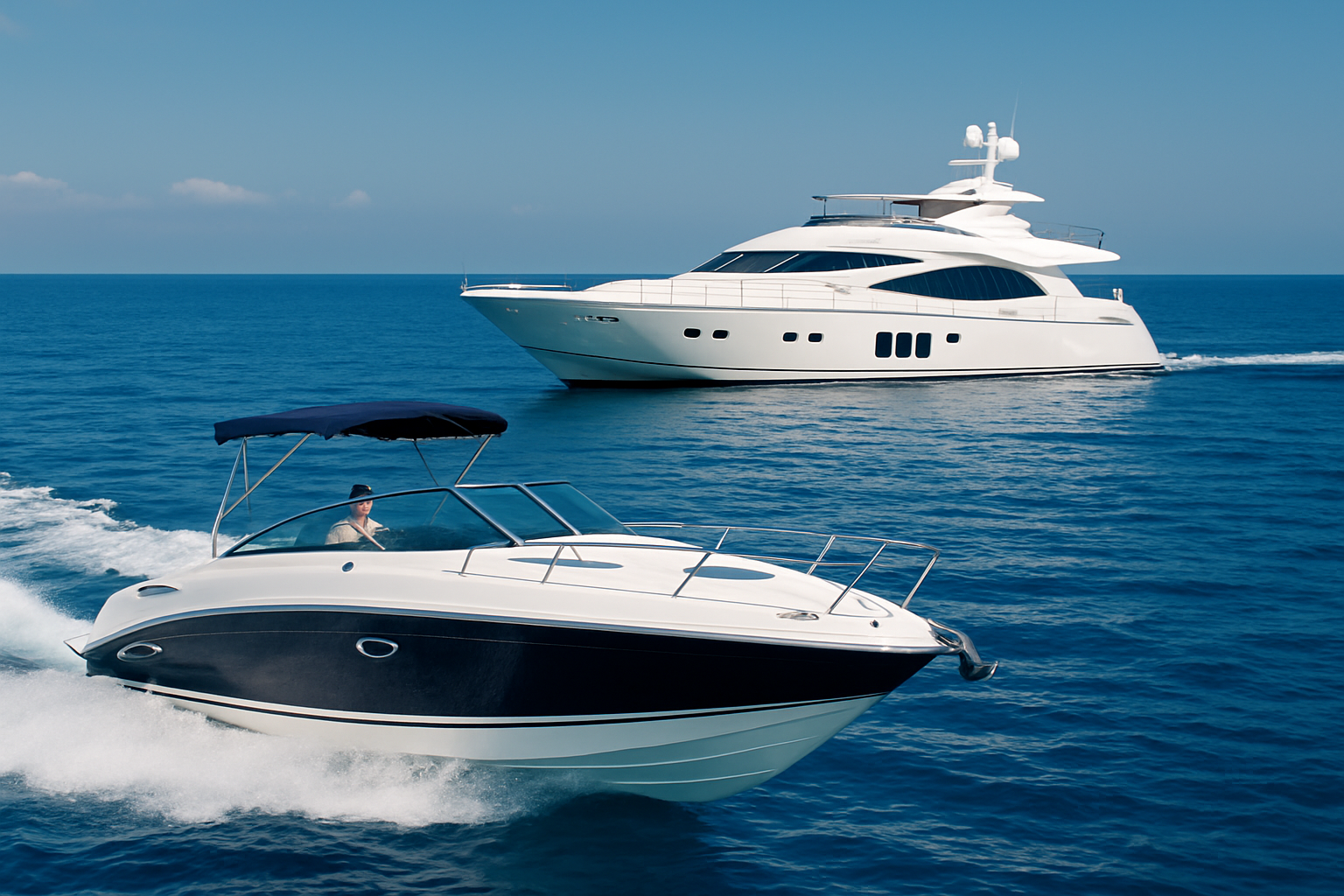
- Personalized search and unbiased guidance across sport boats, pontoons, cruisers, and luxury yachts over 80 feet
- Financing assistance with trusted marine lenders
- Accredited marine survey coordination and sea trial support
- Title, documentation, and escrow management
- National and international transport logistics
- Professional captain services for training and deliveries
- Transparent communication and a high-touch experience from offer to handover
Whether you’re buying your first 30-footer or your first 100-footer, our disciplined process simplifies decisions and safeguards your investment.
Ready to buy your first yacht with confidence? Contact New Anchor Yacht Sales for a pressure-free consultation and let’s chart the right course together.